
Objects and Everyday Rituals

The objects we live with become part of the rituals that shape our everyday lives.

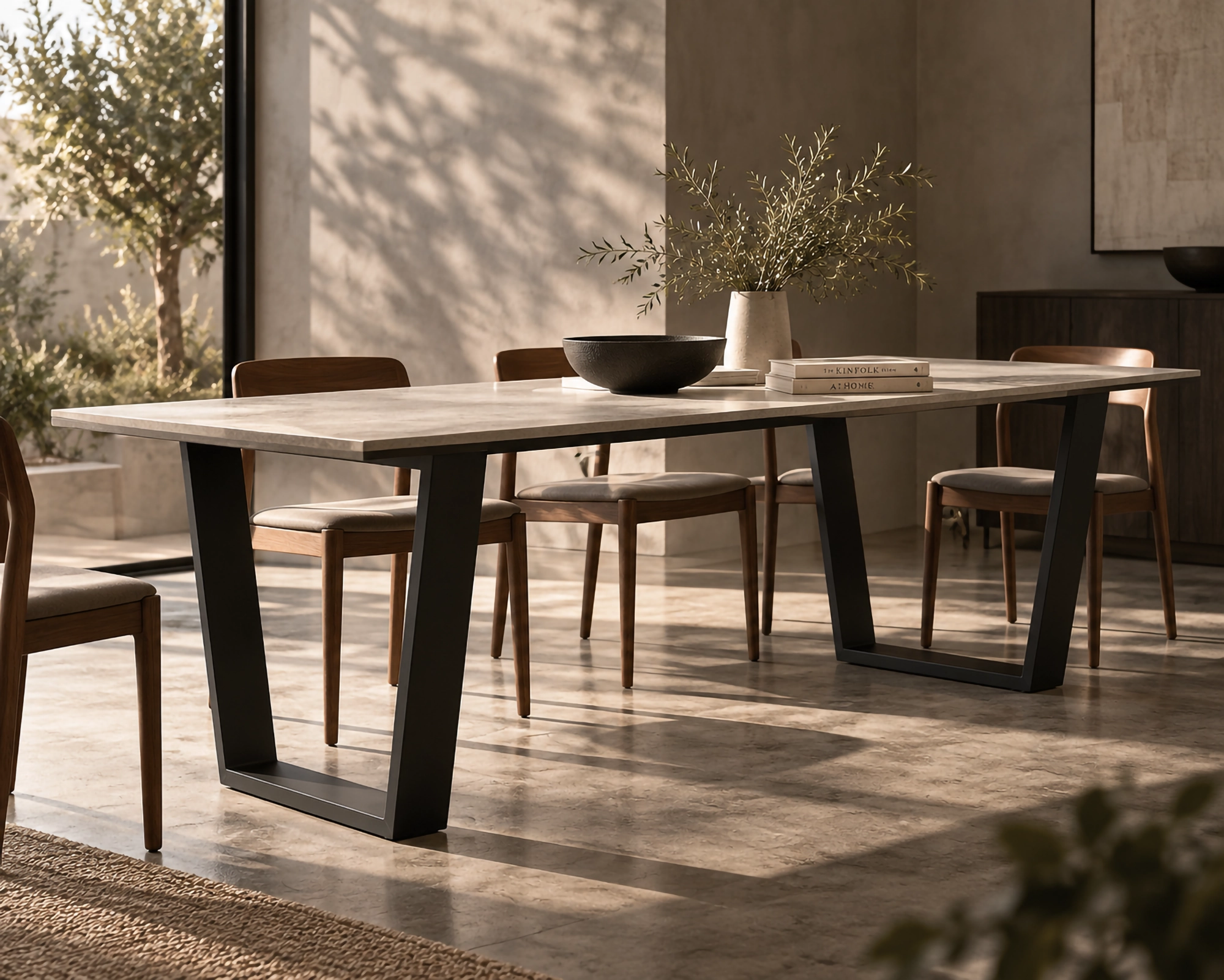
KATACHI dining table with mineral GFRC top and black steel frame in a warm architectural interior

The objects around us become part of how we experience a day. A table is not simply a surface, and a chair is not simply somewhere to sit. They become part of the moments that happen around them.

At KATACHI, we are interested in that quieter relationship between objects and everyday life — how proportion, material and presence can support the rituals we return to without demanding attention from them.

01 / 04

We rarely think about the furniture we use every day. That is part of its success.

A dining table becomes the place where meals are shared, conversations continue and people gather. A coffee table sits within the rhythm of a room — holding objects, supporting moments and becoming part of the space around it.

The best objects become familiar without becoming invisible. They earn their place through use.

02 / 04

Over time, the objects around us begin to carry a familiarity that goes beyond their function.

A surface develops small signs of use. A particular chair becomes someone's usual place. A table becomes associated with meals, conversations, work and quiet moments.

This is one reason we value materials that can age with character. An object should have enough presence to become part of a space, but enough restraint to leave room for the life happening around it.

03 / 04

A well-designed object does more than perform a function. It creates the conditions for that function to happen naturally.

The proportions of a table influence how people gather around it. The height of a surface changes how it is used. The space beneath and around an object affects how easily people move through a room.

These relationships are subtle, but they are what allow furniture to feel considered rather than simply placed.

04 / 04

The value of an everyday object is rarely found in a single moment. It is built through repetition — through the thousands of ordinary interactions that happen over its life.

This is why we believe furniture should be considered beyond the moment of its first impression. It should feel right in the room, work naturally in use and remain compelling as the years pass.

The goal is not to create objects that demand attention, but objects that become worthy of keeping.

The objects we live with become part of our lives.

KATACHI