
Form Follows Living

How the way we live shapes the objects we choose to live with

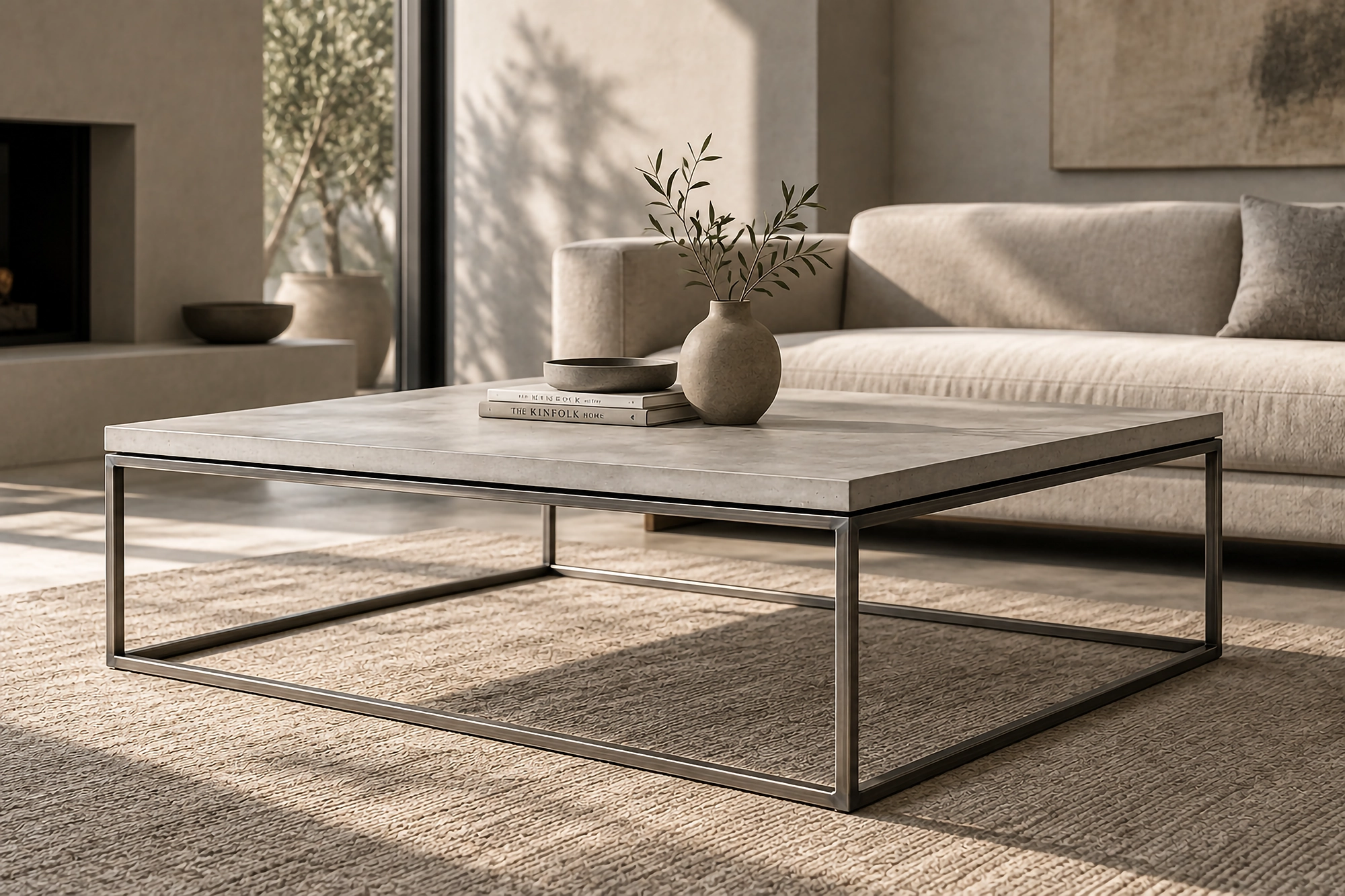
KATACHI coffee table with smooth GFRC top and black steel frame in a warm contemporary living room

Furniture exists within the spaces and routines of everyday life. The way we sit, gather, move and use a room inevitably shapes the objects we place within it.

For KATACHI, design begins with that relationship. An object should not simply occupy space; it should respond to it — balancing proportion, function and presence with the way people actually live.

01 / 04

Furniture is part of the rhythm of a room. A dining table becomes a place to gather. A coffee table becomes part of conversation, movement and pause. A side table supports the smaller rituals that happen around us every day.

These functions may seem ordinary, but they shape how an object should be designed. Proportion, height, scale and placement all influence whether a piece feels natural within the life of a space.

02 / 04

The right proportions can make an object feel almost inevitable within a space. Too large, and it dominates. Too small, and it disappears.

This is why proportion comes before decoration at KATACHI. We consider the relationship between the object, the person using it and the space around it before adding anything unnecessary.

Good furniture does not compete with the life around it. It gives that life a place to happen.

03 / 04

An object is never experienced in isolation. The space around it becomes part of how it is perceived — the distance between pieces, the movement around them, the light that falls across their surfaces.

This is particularly important with simple forms. When there is little decoration to distract the eye, proportion, spacing and material become more visible.

We design with that relationship in mind. The object matters, but so does the space it creates around itself.

04 / 04

The objects we live with become part of our everyday rituals. Their scale, weight, surface and position influence how a space feels and how naturally we move through it.

This is why KATACHI begins with function, but does not stop there. An object should work effortlessly while still contributing something to the character of the space around it.

Dining, coffee and side tables are simple objects. Their simplicity is precisely what makes their proportions, materials and presence worth considering carefully.

Furniture should make space for living.

KATACHI